


|
Calculate bike size: MTB/mountain, road, gravel and urban |
|
|
| Talla bicicleta Guía completa Gravel Niños Eléctrica Cuentakilómetros |
Road size: (Man / Woman)
Urban size: (Man / Woman)
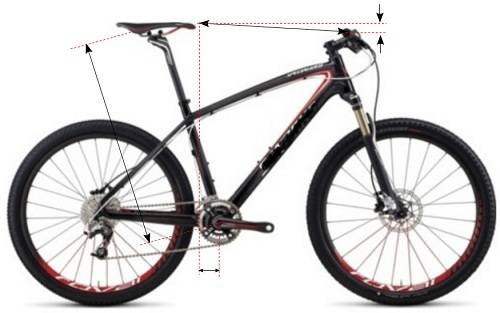
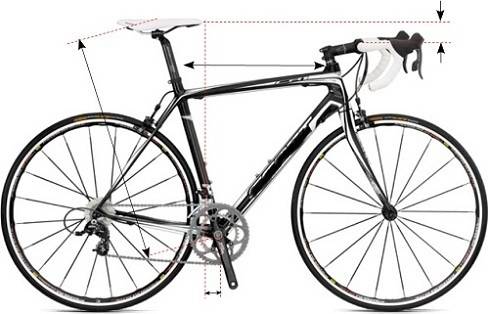
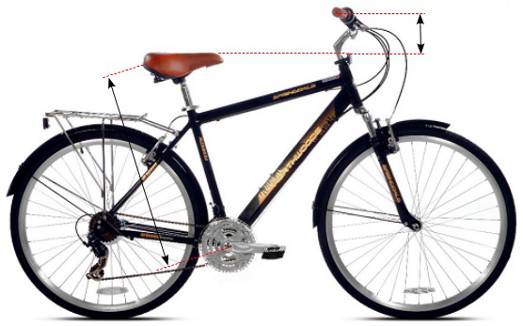
Keep in mind that the bike size between two different manufacturers may vary, as some manufacturers measure from the bottom bracket to the seat tube top while others measure to the center of the horizontal tube, varying more than one inch between manufacturers.
Many manufacturers label their bike sizes with letters. Check the manufacturer's website to obtain the equivalence between letter sizes and the actual frame size.
An approximate reference of letter sizes to numerical sizes is:
| Size | Mountain | Road |
|---|---|---|
| XS | 14" - 14.5" | 39 |
| S | 15" - 16.5" | 39 - 43 |
| M | 17" - 18.5" | 43 - 47 |
| L | 19" - 20.5" | 47 - 51 |
| XL | 21" - 22.5" | 51 - 55 |
| XXL | 24" - 24.5" |
What if you're between sizes?
It would be unusual for the calculated bike size to exactly match a frame size, or for that exact size to be manufactured. For example, you get size 19 inches but the bike is only available in 18" and 20". In this case, choose the smaller size as it's easier to achieve the correct position with a slightly smaller frame by adjusting the seatpost and stem length.
In any case, testing the bike in person is always the best option.
When buying a bike, choosing the right size is crucial for comfort, performance, and injury prevention.
While rider height is often used as a reference, the inseam and forearm measurements are more important when determining the correct bike size.
Mountain bike sizes are usually expressed in inches, with the seat tube height being the most important measurement that determines bike size.
For road bikes, size is usually expressed in centimeters, again using the vertical tube of the frame as the reference.
Urban bikes should be more comfortable with a more upright riding position — the handlebars will sit above the saddle. They also allow you to place your feet on the ground more easily due to frequent stops.
For kids' bikes, the measurements obtained here will not provide safety or comfort for a child learning to ride. In that case, reduce the calculated values so the child can rest both feet fully on the ground while seated.
While a detailed bike fitting study is possible, here we provide a reference for bike size and adjustments using just two measurements:
Measure your inseam (crotch)
Measure your forearm
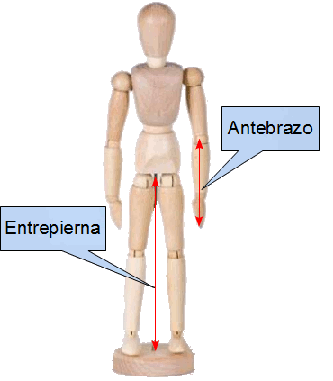
How to measure your inseam?
This should be done barefoot. Stand against a wall and measure from the floor to the point where you sit on the saddle.
(You can use a book spine, a ruler, or a stick — straddle it against the wall and mark the top edge on the wall.)
How to measure your forearm?
Measure from your elbow to the tip of your middle finger along the back of your forearm. Rest your bent arm with your hand flat on a table to make this easier.
How to set up the saddle?
The saddle should be completely level — not tilting up or down. You can use a spirit level to check it's parallel to the ground.
Saddle height and setback relative to the bottom bracket are determined by your forearm length and leg length. Use the measurements obtained from the instructions above. Setback is the horizontal distance between the bottom bracket centre and the tip of the saddle.
Related articles
Guide to choosing the right size: charts, common mistakes and tips.
Stack, reach and gravel geometry explained model by model.
Guide by age, height and wheel size from 12" to 24".